
The Transformative Impact of Medical Research

A South Dakota veteran suffering from post-traumatic stress disorder and severe chronic pain agreed to participate in a research project with USD neuroscientist Lee Baugh, Ph.D. He had been taking a medley of prescribed medications over many years to treat his pain, but PTSD caused by war engagements was the target of this project. Baugh was looking to treat the social isolation that often accompanies PTSD using a technique the technology in his lab makes possible—applying small electrical currents directly into the brain to encourage particular neurons to fire.
This patient had an unexpected breakthrough. With just two weeks of neurostimulation, his pain disappeared. Before this, he routinely woke in the night to take another dose of painkiller—suddenly, he was sleeping comfortably through the night. These low-level electric currents applied in just the right place in his brain dramatically improved his quality of life. Since this breakthrough, he’s been returning to Baugh’s lab at three-month intervals to undergo transcranial direct current stimulation, and his chronic pain has, in essence, been cured.
An experiment aimed at totally distinct factors resulted in an unexpected breakthrough for one man's chronic pain—and launched Baugh’s next project, which aims to replicate this effect for others who suffer from chronic pain. Stumbling across effects like this, trying to replicate them, and explaining the science behind the phenomena is what scientific research at the University of South Dakota’s medical school looks like.
The USD Sanford School of Medicine trains South Dakota’s future doctors and acts as a hub of research with impacts on everyday South Dakotans and beyond.
Educating South Dakota’s Future Physicians
Baugh is an associate professor in the Division of Biomedical and Translational Sciences and director of the Center for Brain and Behavior Research (CBBRe). CBBRe trains and educates future scientists and doctors studying neuroscience and behavior. The technical equipment available in CBBRe gives students the unique opportunity to conduct research guided by expert faculty in biomedical science and related disciplines.
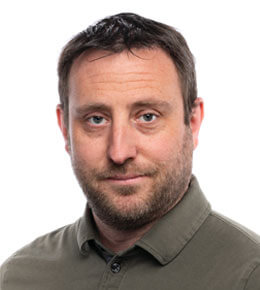
Training future doctors in South Dakota increases the likelihood that they will remain and practice in the state. Having the research facilities in the state means South Dakota’s doctors are well trained and understand the local context. Baugh said, “By giving students research opportunities here, we're better able to train our local workforce, on the research side, as well as incorporate this sort of research into their future careers, in medicine.” Experienced doctors working in rural areas provide necessary services to South Dakotans, reducing the burden of transportation to faraway clinics.
For students, research provides a practical application of classroom learning, promoting a deeper understanding of their field in addition to the opportunities that research experience often opens. By learning to use technologies for research projects, they learn valuable skills necessary in many medical and scientific careers.
Baugh came up through his education as the technology to study brains became more and more advanced. He chose South Dakota because of the medical school’s investment in this technology and the opportunity that gave him to develop and shape his own research center for human subjects research. Students in USD’s medical school are able to train using state-of-the-art methods and technologies because of the research Baugh and his colleagues do.
Victor Huber, Ph.D., is a professor of immunology and virology. Raised on an Air Force base in South Dakota, Huber has been interested in infectious diseases since childhood. He recalls his father describing an immune response to illness as “defending against an invader,” a spark that propelled him to study science, and eventually health and medicine.
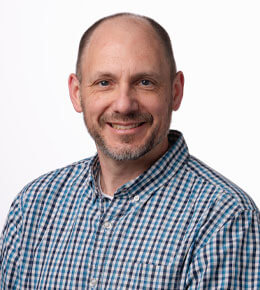
“I've always revisited that as I've progressed through my career of understanding what's happening within the host,” Huber said. “It very much is a way for our body to try to eliminate the pathogen using the tools that are available. And we can improve those tools and stock up that military by using what's available; things like vaccines and antibiotics are available to help us combat these infectious diseases, and we are working to make them better and more effective.”
The moments of wonder, consternation and awe in the lab can spark a lifetime of curiosity. Huber said, “The cool part of being in the lab is seeing something that no one's ever seen before and wondering, ‘Is this real? Is this new? Did I mess this up?' When a student comes asking that, that moment is so exciting for me as a mentor.”
Xuejun “XJ” Wang, M.B.B.S., Ph.D., studies heart disease, aiming to understand and slow the progression of heart disease to heart failure. Formerly a Ph.D. student at the Sanford School of Medicine himself, Wang is now the director of the M.D./Ph.D. program. He guides the education of students coming to USD to become doctors, study biomedical sciences and do medical research.
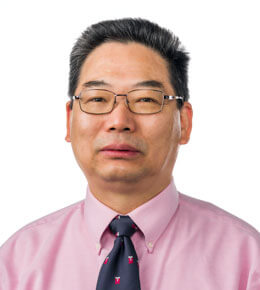
Wang eagerly passes on his passion for scientific research to students. “You yourself can only do so much. You train more people, and you get to see what they can do,” Wang reflected. “I’m glad to see them making a difference now.”
Laughing with a pleased, understated embarrassment, Wang recounted a story of a friend from Arizona texting him a photo of a presentation. When he zoomed in, he realized the list of names on the slide were nearly all his former students—and then his own name, under the heading "Top Researchers in Cardiac Protein Quality Control.” The lineage of researchers in this niche of medical research is rooted in South Dakota, and in Wang’s mentorship. He grinned, saying, “I’m so proud that all this work was done here at USD, in the School of Medicine.”
Clinical Translational Research
Clinical translational research translates knowledge gained in the lab to improve medical practice, benefitting the people of South Dakota and others with conditions studied by researchers at USD.
Cardiovascular Health
Wang’s area of expertise, cardiovascular health, has led him to research protein quality control. Many diseases—including heart disease and Alzheimer's—are caused by misfolded proteins aggregating together. Cells start failing to function, causing others around them to fail as well: a dangerous proposition when those cells’ job is making your heart beat.
In Wang’s research, he studies the molecular structure of heart cells to explore new treatment options for degenerative diseases. Using a method he invented to genetically modify heart proteins, he was able to understand heart disease progression and see how it leads to heart failure. He’s hopeful that this work will contribute to treating or even curing some heart diseases.
This research also has ramifications for other diseases; the same method he invented can be used to study degenerative diseases, like Alzheimer’s, in other organs. He collaborates with cancer biologists and neurologists to learn more about how these breakthroughs can affect how we treat many different diseases.
Those breakthroughs have been noticed and have given people hope. Wang has been contacted by patients who read his work and want to try treatments based on his discovery. He refers them to clinicians working in his field, since treatments based on his research are now in trials. If drugs based on this research pass clinical trials, they will make a difference in how doctors care for patients with heart disease.
“Scientific discovery is tedious; it’s a lot of work, but once you make a discovery, you realize that discovery can make our lives better—ultimately, one day, it can save patient lives and improve quality of life,” Wang said.
Neuroscience
Baugh’s research uses new technology tools to understand how brain function and behavior are linked, aiming to change brain activity to support recovery for PTSD and stroke patients. He studies human subject research in the neurosciences related to health care.
A common thread in Baugh's research is neuromodulation, a strategy of stimulating the brain with electrical or magnetic currents to promote neural firing in a particular way. He asks the question, “By using these new techniques of direct current or magnetic stimulation to the brain, can we improve clinical outcomes?”
Clinical translational research can have monumental impacts on patient experiences. Baugh’s work with stroke patients focused on the discrepancy between patient results on a bedside test—a series of actions patients complete to demonstrate significant recovery after a stroke, used to help doctors determine whether a patient is ready to be discharged—and their experience after release.
Baugh’s research uses human subjects; by talking to people about their experiences and collecting data on their brain while they complete tasks, he can better understand what happens in the brain while, for example, patients recover from a stroke. His approach, which works with stroke patients to identify and remedy the real-world challenges they face after they’re discharged by the bedside test, helps patients directly, and it also translates back to clinical approaches. Baugh might find ways to tweak bedside tests that allow doctors to better assess patient readiness to re-enter everyday life after a stroke.
Non-invasive measurements of brain function have the potential to help us better understand how PTSD is manifesting differently in different patients. The eventual hope, Baugh explained, is to be able to better predict how people might respond to traumatic events, prevent PTSD development and provide support when someone does develop it.
Baugh said, “Utilizing these new technological advances to better understand how the brain is responding to any sort of event—whether it's a stroke or exposure to a traumatic event—will help us better prognosticate. We can determine who's going to have more difficulties, and then who's going to respond to treatment and things that we can do to best support their rehabilitation or treatment moving forward.”
Working on mental health support in South Dakota, Baugh reflected, “South Dakota is not immune to mental health issues, but it is a state where disclosing those and discussing them and seeking treatment for them is lower than average. There's a stigma that's associated with it.” He’s hopeful that his research can help normalize seeking mental health treatment and help people feel less alone.
As a rural state, South Dakota’s opportunities for mental health practice can be limited; patients far from clinics might not only feel shame about seeking treatment, but also face physical barriers (driving time, cost of gas and more) to getting necessary help.
One treatment for PTSD that Baugh investigates is transcranial direct current stimulation—targeted, low-level currents that encourage neurons to fire when patients do particular tasks. A benefit of this treatment is portability. Being able to send patients home with technology significantly reduces the burden on a rural South Dakotan who needs PTSD treatment. The Sanford School of Medicine’s cutting-edge treatments and technologies are helping make this life-changing treatment possible.
Infectious Disease
Huber specializes in infectious diseases, with one avenue of research unravelling how the influenza virus operates within a person after they have been vaccinated. He’s working to improve the flu shot. Another avenue studies secondary infections, like pneumonia, that often cause death. The danger of getting the flu is less due to the flu virus itself, and more due to infections one might incur with an immune system weakened by the flu.
Huber sees the effects of his field of research every time an infectious disease sweeps the world—like the H1N1 pandemic in 2009 or the coronavirus pandemic. He hopes that his research can contribute to preparing the world for the next infectious disease: “We’re trying to be a little bit better prepared—to have something that you can put into place more rapidly. That's what we're working toward: a vaccine that can be more broadly and easily used.”
Huber describes the power of a virus like influenza. He said he is “humbled by the fact that this virus has a very small genome, but it's still very difficult to solve.” He sees himself as one part of a larger effort that will hopefully lead to a universal influenza vaccine in the future.
His specific approach to this effort is unique. He works to understand interspecies transmission events—when a disease jumps from birds to cattle, or from pigs to humans. Huber tackles this issue using knowledge of viruses from two species in the hopes of developing vaccines that prevent interspecies transmission.
In studying the secondary bacterial infections that cause influenza deaths, Huber takes an unusual approach. He models less severe responses, aiming to understand and hopefully learn to replicate these milder reactions. In one study, he created a virus with a slightly different gene structure. By adjusting the virus’s genome, he saw a substantial reduction of infections. He hopes that this will be one piece of a response that can reduce the number of people who die from influenza outbreaks each year.
Sanford School of Medicine: A State Leader in Research
The Sanford School of Medicine not only conducts research, but also leads efforts to make medical research possible for organizations across the state. Huber is the principal investigator of South Dakota’s INBRE grant, which provides research funding for states and territories underfunded by the National Institutes of Health. South Dakota receives $2.75 million annually, which Huber administers to state-wide partners.
This money makes it possible for universities and organizations across the state to conduct research that would otherwise be too costly. South Dakota INBRE now includes 10 partners: Augustana University, Black Hills State University, Dakota State University, Dakota Wesleyan University, Mount Marty University, Northern State University, Oglala Lakota College, Sisseton Wahpeton College, South Dakota Mines and the University of Sioux Falls. These partners benefit from this grant in myriad ways; they can build research facilities, invest in biomedical research and expand undergraduate research opportunities.
Huber’s vision for the future of research in South Dakota is built from his own experience growing up and attending college in South Dakota. As an undergraduate student, limited research opportunities were available to Huber, and he is passionate about expanding those opportunities for today’s students.
“I really get excited when I see students who applied for and got undergraduate experience in the INBRE program come to medical or graduate school,” Huber said. “They go on to their medical careers or other paths; it's nice to see that development.”
Collaborative Science
Collaborating with scientists and clinicians across the country, USD’s researchers in the Sanford School of Medicine position South Dakota in national conversations about health.
The ENIGMA Consortium is a worldwide collective of scientists trying to use neuroimaging and genetic information to understand psychiatric conditions. Baugh has worked in several areas with this group, but focuses on PTSD.
Collaborative science allows Baugh to contribute to studies with tens of thousands of patients to learn more about conditions like PTSD than would be possible with smaller sample sizes.
Baugh’s research center is unique in that it does not specialize in one condition but instead focuses on technologies. Given the limited availability of these resources in South Dakota, Baugh's lab invested in flexible expertise in the lab equipment to promote collaboration with researchers across disciplines.
Baugh said, “No matter how good I get at the things that I know, I'm not going to be able to learn everything.” By partnering with researchers with expertise in business, psychology, fine arts and other fields, Baugh is better able to understand and influence brain activity in a variety of contexts. “Focusing more on the techniques allows us to partner with people that have very important questions that need to be answered. We can figure out how best to address specific challenges within that field,” Baugh explained.
Scientific Discovery to Improve Well-being
No matter what happens in research, Huber says, you learn something. “Science always tells the truth,” he repeats to students. “Whether we want to know it or not, it’ll tell us if our hypothesis is wrong.” The beauty of scientific inquiry, to him, is interpreting what surprise results might mean. “No matter what happens, you got a result, and it’s your job to understand what the result is telling you.”
The interpretations and conclusions of researchers like Baugh, Huber, Wang and others among the distinguished researchers at the USD Sanford School of Medicine make lives better. From veterans relieved of their chronic pain to patients gaining hope through innovative heart disease treatments, South Dakotans experience invaluable results of those efforts: better quality of life, more promising outcomes and greater access to the life-saving care made possible through research.
You May Also Like

USD’s Master of Public Health Program Achieves Reaccreditation
The University of South Dakota and South Dakota State University’s joint Master of Public Health (MPH) program has been granted reaccreditation for a seven-year term, the maximum given, by the Council on Education for Public Health (CEPH).

SPURA Students Present at 2026 Eastern South Dakota Undergraduate Research Symposium
Eight undergraduate researchers participating in the University of South Dakota’s Summer Program for Undergraduate Research in Addiction (SPURA) finished a productive summer of research by presenting their work at the 2026 Eastern South Dakota Undergraduate Research Symposium.

USD Knudson School of Law Alumni Honored With 2026 Unleash Your Legacy Awards
Two distinguished alumni of the University of South Dakota Knudson School of Law were recognized as recipients of the 2026 Unleash Your Legacy Alumni Achievement Awards, celebrating their exceptional professional accomplishments, leadership and commitment to serving others.
