A Duty to Dignity: An Insider Look at South Dakota’s Midwest Street Medicine Program

This story was written by Rebecca Hofer, SSOM Class of 2027, and Theron Liggons, SSOM Class of 2028.
Preparing for their weekly “rounds”, they huddle together, backpacks filled with medical supplies, fabric wagon carts pulled behind them and stethoscopes around their necks. Rain or shine, they’re preparing to meet South Dakota’s most vulnerable populations where they’re at: on the streets of Sioux Falls during an early Sunday morning.
“It’s tempting to say our job is to offer medical care or addiction treatment,” says Melissa “Mo” Dittberner, Ph.D. “But honestly, the most meaningful thing we offer is trust. Sometimes the most important interaction is a conversation, a string cheese and an orange, or simply showing up consistently. That’s where everything else begins.”
A Conduit to Care
A professor of addiction counseling and prevention at the University of South Dakota, Dr. Mo is the co-founder and executive director of Midwest Street Medicine (MWSM) alongside Dr. Shannon Emry, a pediatrician and associate professor at Sanford School of Medicine. On a post-pandemic Zoom call, the two found a common passion for vulnerable populations and the gaps in care the unhoused population faces.
“We immediately connected on the fact that people need dignity and care right where they are,” Dittberner explains. “We knew systems were broken and thought South Dakota needed a new model and a conduit to care for the most vulnerable populations.”
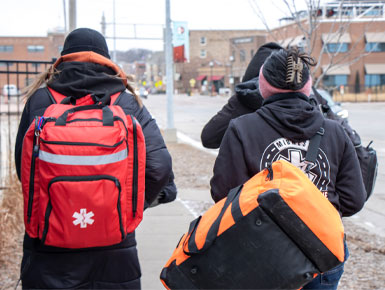
From this connection, MWSM was established in July 2023, and has been seeking to remove barriers, build rapport and create space for real relationships and dignity ever since. What started as a grassroots operation has grown into a multi-site organization, expanding from Sioux Falls to Rapid City, Aberdeen and Pierre, and involving over 150 volunteers and 39 partner agencies.
“Our mission is simple,” Dittberner states. “We bring healthcare directly to people who need it most. We meet people where they are: physically, emotionally and without judgment.”
The Power of Presence
For MWSM volunteers, the action of “showing up” is a powerful reminder of the impact of connection and compassion in medicine. When Phebie Rossi, a medical student in the Class of 2027, began volunteering at the Rapid City site in March 2025, she quickly witnessed how consistency in meeting patients outside of the standard hospital walls created a new depth of relationships.
“Trust is built the more times you see people, share a smile or complain about the weather together,” Rossi explains. “I think MWSM affords students a look into the lives of patients that we don’t always see in the clinic. It provides a better understanding of the social factors that influence health and access to care.”
Dittberner echoes this sentiment, saying that understanding these social factors and access barriers is an essential part of MWSM. Systemic barriers create issues surrounding healthcare, housing and behavioral health when the systems don’t talk to each other.
“But honestly, one of the biggest challenges is stigma,” Dittberner expresses. “We provide wound care, medications, harm reduction, mental health support and connections to housing and services, but none of that works without a relationship. When we look at someone who has been turned away, judged or overlooked, and say, ‘I’ll work with you’—that’s everything.”
With over 900 unique patients and 2,800 medical interactions in 2025, the MWSM team reports preventing over 1,100 emergency department visits and saving over $2 million in healthcare costs.
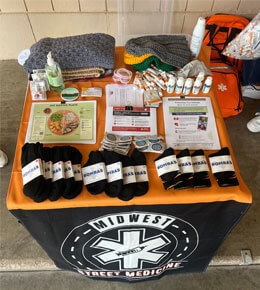
Still, with all the money saved and numbers tracked, Dittberner argues that their most important metric measure is engagement over time.
“Nearly 50% of individuals we served returned for a second visit within the year, which we view as a meaningful indicator of trust and behavior change—not just service utilization,” she says. “We also track non-medical interactions—things like providing food, clothing or simply having a conversation. In 2025 alone, there were over 8,000 of these interactions, and they are critical because trust always comes before care.”
New Frontiers
As the network continues to expand across South Dakota, new frontiers for innovation and outreach also present themselves. Max Miller, a medical student in the Class of 2028, has volunteered with the organization since May 2025, and is hoping to launch a new chapter in Pierre. Alongside his fellow classmates in the Frontier And Rural Medicine (FARM) Program and the physicians at this site, he hopes to connect with the community on its own terms and make an impact.
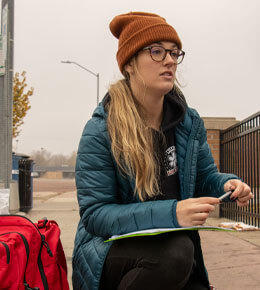
“What’s great about MWSM is there is no one way it has to look,” he explains. “We expect MWSM to look different in Pierre than in Sioux Falls. But at the end of the day the mission is to help those who need it most.”
The MWSM team consists not only of physicians and medical students, but also nurses, pharmacists, community health workers and peer support specialists. This multidisciplinary team is essential to ensure holistic care for patients that often face a multitude of barriers.
“My mom’s been in the banking industry her whole life, and she even comes out on rounds,” Miller encourages. “Anyone has the ability to help.”
As for Rossi, her vision for the Rapid City network includes continued expansion to allow more time to spend with patients.
“Expanding outreach opportunities and building stronger relationships with community partners would allow us to provide more consistent support and follow-up,” she says. “Even small efforts: providing basic care, resources or simply checking in, can make a difference for people who might otherwise fall through the cracks.”
A Growing Ripple
When asked what she’s most proud of, Dittberner states it’s building something the community can trust. The key, she says, is to lead with humility and to listen more than talk.
“You are not there to fix people; you are there to walk alongside them,” she says. “I’m also incredibly proud of the students and volunteers who step into this work and allow it to change them. That ripple effect is how this movement grows.”
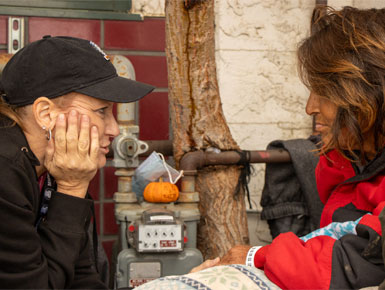
As the ripples spread across the state and MWSM continues to expand its impact, students express the importance of being grounded in their communities, reminding them of why they chose medicine in the first place.
“As a medical student, it’s really easy to feel small. MSWM has shown me that you don’t need to have all the answers to help someone,” Miller expresses. “Healing doesn’t always come from medications or procedures. Sometimes it comes from simply listening and being present. When you do that, well,” he offers a grin, “the sky’s the limit.”
If you’re interested in supporting or volunteering with MWSM, please visit midweststreetmedicine.org or find them on Facebook.
You May Also Like

USD’s Master of Public Health Program Achieves Reaccreditation
The University of South Dakota and South Dakota State University’s joint Master of Public Health (MPH) program has been granted reaccreditation for a seven-year term, the maximum given, by the Council on Education for Public Health (CEPH).

SPURA Students Present at 2026 Eastern South Dakota Undergraduate Research Symposium
Eight undergraduate researchers participating in the University of South Dakota’s Summer Program for Undergraduate Research in Addiction (SPURA) finished a productive summer of research by presenting their work at the 2026 Eastern South Dakota Undergraduate Research Symposium.

USD Knudson School of Law Alumni Honored With 2026 Unleash Your Legacy Awards
Two distinguished alumni of the University of South Dakota Knudson School of Law were recognized as recipients of the 2026 Unleash Your Legacy Alumni Achievement Awards, celebrating their exceptional professional accomplishments, leadership and commitment to serving others.
