USD’s Division of Health Affairs Drives Transformative Change Across South Dakota

Despite steady population growth, South Dakota remains a predominantly rural and frontier state. As of mid-2024, South Dakota’s population reached about 924,669, up from around 886,667 in 2020. Of its 66 counties, 30 are classified as rural and 34 as frontier—fewer than six people per square mile. More than half of the population still lives outside the two major metropolitan areas of Sioux Falls and Rapid City. Because of this large rural footprint, South Dakota continues to face significant challenges in providing equitable health care access and workforce coverage across its communities.
USD Division of Health Affairs
The Division of Health Affairs at USD serves as the strategic umbrella for the Sanford School of Medicine and the School of Health Sciences, unifying the university’s full breadth of health education and innovation. Under the leadership of Vice President for Health Affairs Dr. Tim Ridgway, the division drives a statewide mission: advancing academic excellence, leading vital research and strengthening community health through outreach and service.
The Division of Health Affairs prepares future physicians, physician assistants, therapists, public health leaders and allied health professionals who are ready to meet South Dakota’s unique needs, especially in rural and underserved communities. The division also leads vital research that informs policy, improves care delivery and strengthens the health of families across the region. Through coordinated outreach, mobile and community-based services, and strong partnerships with local organizations, USD faculty, staff and students work to improve the lives of South Dakotans and ensure that high-quality care, education and innovation remain accessible to all.
USD Sanford School of Medicine
The USD Sanford School of Medicine (SSOM) has provided high-quality medical education with excellence in education, research and service since 1907. As the state’s only medical school, the SSOM is uniquely responsible for training the next generation of physicians for South Dakota. Its students and graduates can be found serving communities of all sizes, from the state’s largest urban centers to some of the most rural frontier regions, helping to meet critical workforce needs and improve access to care.
Although the SSOM began as a two-year medical program, it became clear that it would need to transition to a four-year curriculum if physicians, once trained, were to remain in South Dakota to practice. The SSOM’s first four-year M.D. graduates received their degrees in 1977, and since then, the school has matriculated nearly 2,500 physicians.
Campus locations of the SSOM across South Dakota ensure that medical education is delivered to every corner of the state. Nearly 2,200 clinical faculty members provide hands-on instruction and real-world learning experiences in a wide range of clinical settings for medical students. Partner hospitals, clinics and health systems across the state welcome SSOM students to train alongside their health professionals, expanding the reach of the curriculum and giving students the opportunity to learn in a variety of practice environments, strengthening both their skills and their commitment to serving South Dakota’s communities.Multiple centers and initiatives mark the SSOM’s dedication to rural South Dakota.
Frontier And Rural Medicine (FARM)
While most medical students spend their second phase, or Pillar 2, of education at campus locations in Sioux Falls, Yankton and Rapid City, 13 students spend those 11 months in rural centers in seven South Dakota communities as part of the FARM program.
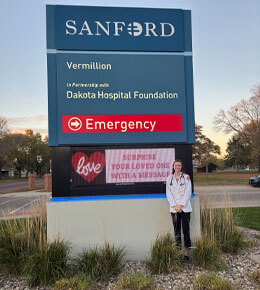
While at their clinical sites, students experience the full spectrum of rural living and providing rural medicine. They work with the health care team to provide supervised care, following patients and their families over time in clinic, hospital and extended care settings. Students also engage with their communities by creating community projects that benefit the community at large and participating in volunteer activities within the community. While functioning as part of the local health care team, students gain firsthand experience with the core disciplines and are exposed to the unique rewards and challenges of rural health care.
Established in 2014, FARM has to date trained 86 physicians, many of whom eventually chose rural family medicine as their career. The program demonstrates measurable impact on the rural physician workforce and offers a model for addressing primary care shortages in underserved states.
New Emergency Medicine Department
To bolster a rural South Dakota workforce, the SSOM has established a Department of Emergency Medicine that will help build a pipeline of emergency medicine residents and physicians for generations to come. With this new department, medical students will benefit from focused training and resources, better preparing them to meet the critical needs of South Dakota’s communities.
The emergency medicine residency will begin training in July of 2026 at the Sanford USD Medical Center in Sioux Falls, a Level 1 Trauma Center that provides the highest level of trauma care for patients in the region, and at Sanford Aberdeen Medical Center for training in rural emergency medicine. Both are essential experiences for the comprehensive training of rural emergency physicians.
This residency is well-equipped to offer high-quality education and practical experience needed to excel in emergency medicine. The three-year residency program will train six residents per year. By July 2028, 18 residents will be training in the emergency medicine residency program.
“Having our own department gives us the best chance to keep the medical students-turned-physicians in South Dakota,” Dr. Ridgway explained. “Statistically, we know that close to 80% of our students stay in the state if they complete both residency and medical education in South Dakota.”
South Dakota Area Health Education Center
The South Dakota Area Health Education Center (AHEC) is a grant-funded program with centers in Yankton, Aberdeen and Rapid City that connect students to careers in health care, health care professionals to communities, and communities to better health.
For more than 40 years, the South Dakota AHEC has worked to build healthier communities by inspiring young people to explore health careers and supporting those already working in the field. Today, SDAHEC continues to empower K–12 and college students, health care professionals, and entire communities through hands-on programs and education. South Dakota is part of a nationwide network of nearly 250 AHECs.
AHEC staff stay closely connected to their communities and design programs that respond directly to local needs. For example, when the Northeast South Dakota AHEC recognized a shortage of educational opportunities for EMS providers in northern communities, staff created specialized training to fill the gap. It’s one of many ways SDAHEC brings practical, community-driven solutions to South Dakotans across the state.
Center for Rural Health & Improvement
As the research arm of the state AHEC office, the Center for Rural Health & Improvement (CRHI) not only meets community needs, but also creates research opportunities for medical students to be involved in. Working with health systems, nonprofits, cities and counties, the CRHI brings many opportunities for improved health and wellness to South Dakota via millions of dollars in federal, state and county grants to help achieve healthier outcomes.
The center’s portfolio of community projects across the state connects SSOM expertise to communities. Erin Srstka, director of the CRHI, said, “We are here to improve South Dakota through workforce resources, to support communities as an ally, in whatever way we can.”
Tribal Diabetes Care
A federally funded diabetes grant has enabled the SSOM Department of Family Medicine to improve health outcomes in Native American reservation communities across North and South Dakota, Iowa, and Nebraska through comprehensive data analysis and program evaluation. This work informs policy decisions, drives environmental change and identifies individuals most in need of targeted interventions.
For example, tracking trends of obesity and diabetes helps make decisions for interventions, education, fitness and healthy eating activities. Improvements can come in the form of developing walking paths, improving nutrition of school lunch programs and offering fitness classes. Every one of the 19 tribes in the four-state area have benefited from the grant.
Coyote Clinic
The Coyote Clinic is a clinic run by medical students in partnership with Avera Health and provides free health care services to uninsured members of the Sioux Falls community.
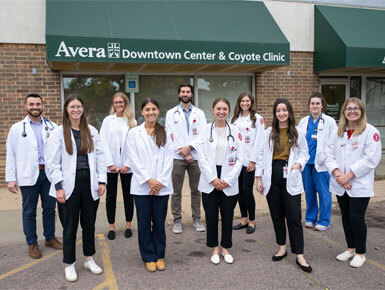
The 100% volunteer-based clinic, located in downtown Sioux Falls, has grown to offer weekly internal medicine clinic nights, monthly psychiatry clinic nights and a bimonthly pop-up clinic at the Bishop Dudley Hospitality House in Sioux Falls. Additionally, the clinic hosts numerous outreach events, offers volunteer opportunities, and provides ongoing research initiatives and health quality improvement projects.
Through these various programs, the clinic has impacted hundreds of uninsured patients. Additionally, Coyote Clinic physicians-in-training conduct outreach events across South Dakota, including flu shot drives and health screening events at local food shelters.
Center for Disabilities
Since 1971, the Center for Disabilities has supported individuals with developmental disabilities, their families and the professionals who serve them through a variety of programs. Delivered across health care, education, mental health and state agencies, these programs promote increased self-determination, independence and a satisfying quality of life throughout South Dakota’s communities, particularly those in rural, frontier and reservation areas.
The center advances its mission through community education, clinical services, training, technical assistance, research, information dissemination and advocacy.
USD School of Health Sciences
The School of Health Sciences shares the SSOM mission of serving rural and underserved populations across South Dakota. Home to nine academic departments and four specialized centers, the USD School of Health Sciences provides the interdisciplinary, outcome-driven training that South Dakota communities rely on.
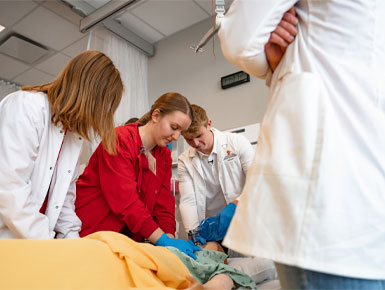
USD fosters a learning environment that reflects real-world health care, bringing students together to learn, collaborate and practice as coordinated teams. By building strong professional networks early, health sciences students are prepared to serve patients from day one. They actively engage with communities by bringing services, education and support directly to the places people live and receive care. Through outreach clinics, local partnerships and hands-on training experiences, they ensure individuals can access resources without barriers.
USD’s addiction counseling and prevention program equips students with the skills to address substance use disorders, an issue that no area of South Dakota is immune to. Graduates of the program become prevention specialists who provide prevention, intervention and recovery services in schools, clinics, hospitals and community programs. By expanding access to trained addiction professionals, the program helps combat one of the state’s most persistent public health challenges.
The dental hygiene program also makes a significant statewide impact. Dental hygiene students hone skills in the Delta Dental Oral Health Center on the Vermillion campus, in the Sioux Falls Dental Clinic and at other outreach events, providing preventive oral health care to underserved populations who may otherwise face barriers to receiving routine care.
In the areas of nursing, occupational therapy, physical therapy and physician assistant studies, USD is a primary contributor to the state’s provider workforce. Nursing students benefit from initiatives that encourage careers in high-need fields, including mental health and rural health care.
Occupational and physical therapy graduate-level programs prepare graduates to support patients in regaining independence, managing chronic conditions and improving quality of life, which are crucial in aging and rural communities. The physician assistant program, the only one in the state, produces advanced health care practitioners who collaborate with other medical professionals to deliver primary and specialty care in clinics and hospitals across South Dakota, with many choosing to serve rural areas where provider shortages are most severe.
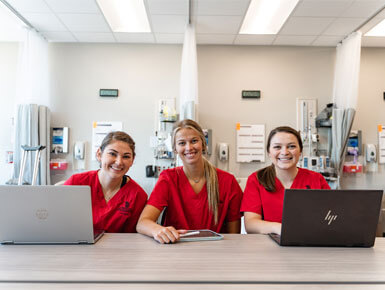
Health encompasses a wide range of careers, including many that do not involve direct patient care. USD’s public health, health sciences and social work programs strengthen the state’s health landscape through prevention, education and community support. Public health graduates work in epidemiology, health policy, community health promotion and emergency preparedness, helping to improve population health and reduce health disparities. Social work students are prepared to serve individuals and families in both rural and urban settings, supporting mental health, child welfare, aging populations and vulnerable communities.
Meanwhile, medical laboratory science graduates bolster hospitals and clinics across South Dakota, ensuring accurate diagnostics, timely test results and essential support for disease detection and treatment. Because many communities in the state rely on smaller health care systems, these trained lab professionals play an especially vital role in maintaining high-quality medical services.
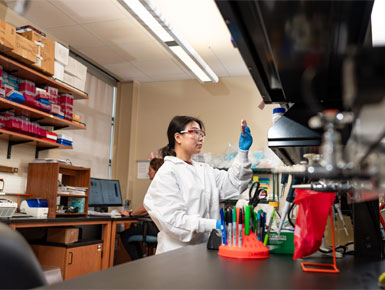
Together, these departments form a comprehensive health education network that directly supports South Dakota’s well-being. By preparing graduates to serve in high-need occupations, providing outreach in underserved areas and partnering with communities across the state, the USD School of Health Sciences is actively shaping a stronger, healthier future for all South Dakotans.
HOSA: Future Health Professionals
HOSA: Future Health Professionals is a student organization born from AHEC whose focus is to recruit students into the health care pathway. Through various partnerships, HOSA students can make connections and take advantage of opportunities that will help propel them into the health care careers they desire.
“HOSA aims to build confidence in students aiming to work in health care as future health professionals,” explained Brock Rops, executive director of South Dakota HOSA. “The more opportunities and engaging resources we can offer them, the more likely they are to have that confidence to continue in that pathway.”
Nationally, HOSA has 300,000 members. In South Dakota, 50 chapters have been established with a combined membership of more than 1,300. Chapters meet monthly with health professions speakers and students to learn, practice competitive events and complete service-learning projects.
As the health care workforce continues to have high needs, HOSA is helping to fill this gap, said Rops. “We have built such a great team of teachers, students, administrators and health professionals all with the same goal of filling the pipeline of future health professionals.”
Center for the Prevention of Child Maltreatment
The Center for the Prevention of Child Maltreatment (CPCM) leads statewide efforts to strengthen families, support positive parenting, intervene to lessen harm, and prevent future risk. CPCM coordinates a wide range of training, data and community-driven initiatives designed to protect children and help professionals access the tools they need.
Through prevention-focused and trauma-informed education, the CPCM helps adults recognize, respond to and prevent child maltreatment while building practical skills. Collaborative initiatives bring partners together to share resources, strengthen services and improve access to support for children and families, including those in rural and underserved communities.
In addition, CPCM monitors key child well-being indicators to guide policy and practice, helping ensure that communities across South Dakota have the insight and support needed to create safe, resilient environments for children.
Project Extension for Community Healthcare Outcomes (ECHO)
Project ECHO is a video-based learning program that helps connect health care providers in rural and underserved areas with experts who can answer questions, share guidance and talk through real cases. The goal is simple: to make sure front-line caregivers, no matter where they live, can access the same knowledge and support as providers in larger medical centers.
USD’s School of Health Sciences is one of two main ECHO “hubs” in South Dakota. These hubs host online sessions that share up-to-date information and training. The “spokes” are the local clinics, hospitals, and community providers who join in to learn, ask questions and discuss real situations they’re facing. Each teleECHO session includes a brief presentation on a specific topic, followed by case discussions from spoke sites.
Participants can learn directly from experts and from one another, and in many cases, earn continuing education credits while they do it.
Office of Research & Innovation
The School of Health Sciences’ Office of Research & Innovation (ORI) is a hub that provides resources for faculty, staff and student research, offering training and pre- and post-award grant support. Since the ORI was established in 2022, the office has supported faculty and students in applying for and carrying out over 70 successful grants and contracts with approximately $20 million in awarded funding. Through its mission to “recognize expertise, innovation, research and scholarship,” the office utilizes its network of experienced professionals to support community-serving research.
Interprofessional Health Education Center
Interprofessional education is necessary to train future health care professionals so that everyone becomes aware of the others’ roles and responsibilities. As the only university in the state with both a comprehensive school of health sciences and a school of medicine, USD is uniquely positioned to provide students with the opportunities to experience learning and practicing as teams. USD’s Interprofessional Health Education Center facilitates collaborative learning among students within these two schools to develop practitioners and leaders in collaborative care to improve population health.
A Lasting Commitment
As South Dakota looks to the future of health care, the impact of USD’s efforts continues to grow. Quality care is not a privilege of geography; it is a commitment to building stronger health systems, healthier communities and expanded access to care across the state.
By preparing the next generation of physicians, nurses, therapists and other health professionals, the USD Division of Health Affairs remains steadfast in the mission to meet evolving health needs with compassion and excellence. The work is measured not in terms of degrees earned or programs launched, but in stronger communities, better access to care and improved quality of life for South Dakotans, reaching patients where they live and work, now and in generations to come.
You May Also Like

USD President Sheila K. Gestring Announces Retirement
After nine years leading the University of South Dakota, President Sheila K. Gestring has announced her retirement, effective June 21, 2027.

Avera, SDSU and USD Sanford School of Medicine Establish Statewide NIH Research Partnership
The National Institutes of Health awarded $11,090,204 over five years to establish the South Dakota Center for Advancing Clinical and Translational Research (SD-ACT), a statewide partnership among Avera Research Institute, South Dakota State University and the University of South Dakota Sanford School of Medicine.

USD Philosopher Joseph Tinguely Awarded John Templeton Foundation Grant
Joseph Tinguely, Ph.D., was recently awarded a grant from the John Templeton Foundation in the amount of $435,790. This grant will support him as he organizes interdisciplinary collaborators with the aim of producing a conference, an edited manuscript and a series of public-facing media.
