
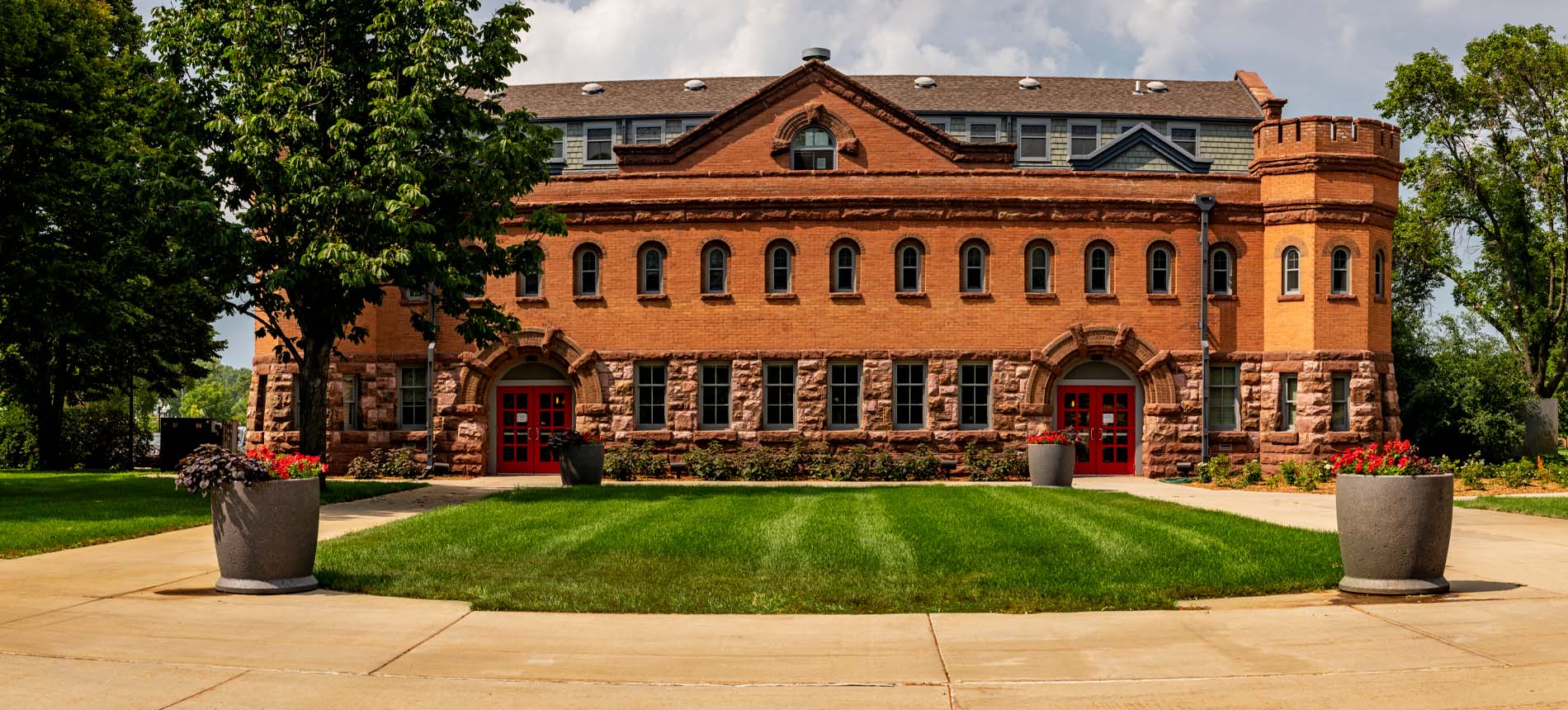
Office of Financial Aid
OfficeThe Office of Financial Aid works with students and parents to explore the many resources available to help make your college education even more affordable.
Contact Us
414 E. Clark Street
Vermillion, SD 57069
8:00 a.m. - 5:00 p.m.
Office of Financial Aid
The Office of Financial Aid works with students and families to explore the many resources available to help make your college education even more affordable.
Explore Financial Aid Information
Resources
To receive financial aid from federal programs you must meet all of the following requirements.
- You must be a U. S. Citizen or eligible non-citizen, a national or permanent resident of the U.S. or in the U.S. for other than a temporary purpose.
- You must have a valid Social Security Number.
- You may not be in default on a federal student loan.
- You must not owe an overpayment of a federal loan or grant.
- You may not have borrowed in excess of aggregate student loan limits.
- You must be admitted to USD in a qualified degree program and registered at least half-time.* Certificate programs are not aid eligible.
- You must maintain Satisfactory Academic Progress as defined by USD.
Note: Incarcerated students are not eligible for Federal Financial Aid. Read more about Federal Student Aid for Incarcerated Individuals on the Federal Student Aid website.
*Full time status for undergraduate students is 12 credits. Full time status for graduate students is 9 credits.
The U.S. Department of Education selects approximately one in three students for verification of the information provided on the student’s Free Application for Federal Student Aid (FAFSA). In limited situations, USD may also select students for verification of FAFSA information.
The South Dakota Enrollment Services Center (ESC) will send an email containing a link for the appropriate verification forms to all USD students selected for verification. Students should promptly complete and return the completed forms with the required documentation. Incomplete verification forms will be returned to the student for completion. Unless otherwise instructed, the verification forms should be returned to the Enrollment Services Center. If additional information is required, the student will receive further communication from ESC. If you have questions regarding the verification process or required documentation, you can contact the Financial Aid Office at 605-658-6250. Financial aid eligibility cannot be determined until the verification process has been completed.
You can also access the verification forms by logging into your self service:
- Select the correct aid year
- Click on the down arrow for each unsatisfied requirement to be directed to the requested information
Once the verification documentation has been received, it will be compared to data elements on the student’s FAFSA. If the information on the FAFSA matches the documentation provided, then no changes to the FAFSA are required, and USD will award financial aid based on the original FAFSA results.
If the verification process results in corrections to any data elements on the FAFSA, the Enrollment Services Center will submit those changes electronically. Both the student and USD will be notified of the reprocessed FAFSA results. In this situation, USD will award financial aid based on the reprocessed FAFSA results.
If you make corrections to your aid record and are selected for verification after aid has already been awarded or disbursed to you, adjustments to the already awarded or disbursed aid may be necessary. USD’s Financial Aid Office will notify the student of the adjustment with a revised Award Letter.
If verification reveals that your aid eligibility has changed, it may be necessary to adjust aid already disbursed to you. Failure to repay aid funds for which you have been determined ineligible will make you ineligible for further Federal Student Aid at any institution until the aid is repaid in full. Unresolved refunds and/or fraud verification cases may be referred to the U.S. Department of Education for collection purposes and to document ineligibility for future student aid.
There are a variety of federal resources and programs available to help you understand your financial aid options and pay for college. Explore the resources available to you below.
The U.S. Department of Education is the agency of the federal government that establishes policy for, administers and coordinates most federal assistance to education.
- Free Application for Federal Student Aid (FAFSA)
- Federal FSA ID
- Managing the Price of College Handbook
- Teacher Forgiveness
Review Internal Revenue Service information for families who are either saving for college or paying/repaying student loans.
Voter Registration - South Dakota Residents
As a part of the Higher Education Act of 1998, Congress directed schools receiving Federal financial aid to assist students who have not yet registered to vote.
Selective Service Registration
Register for selective service online.
Learn about the GI Bill and other benefit programs for veterans at USD.
Students who withdraw, drop out, or are expelled from the university can review policies regarding returned funding or information about how to receive refunds below.
If you currently receive federal financial aid, you may be able to apply your aid to an approved study abroad program.
If you are not currently receiving federal financial aid but believe you may need assistance to fund your study abroad program, you must file the Free Application for Federal Student Aid (FAFSA) online at https://studentaid.gov/h/apply-for-aid/fafsa. We recommend completing your FAFSA in March prior to the academic year you plan to study abroad.
Students who plan to use financial aid during their program abroad must meet with the Financial Aid Office to go over eligibility. Plan ahead. You should allow at least 4-6 weeks for financial aid processing.
Can I receive additional financial aid to help with my expenses?
A student's cost of attendance may be adjusted to accommodate the following costs associated with an approved study abroad program:
- Tuition and Fees
- Room and Board
- Books and Supplies
- Transportation expenses
- Personal expenses
- Insurance/visa costs
Increased cost of attendance may allow students to apply for additional loan assistance in the form of Parent PLUS loans or Alternative Loans. Additional applications are required for these aid programs. Please contact Financial Aid for further information.
Will my USD Scholarships apply to my study abroad program?
USD Scholarships may be applied to some Study Abroad programs. Please see the Gallagher Center for Experiential Learning and Education Abroad (GC) or the Financial Aid office regarding those specific programs.
Students who currently receive the South Dakota Opportunity Scholarship may need to apply for an exemption request. Please contact the Financial Aid office for further information.
Other considerations
If you anticipate receiving a financial aid refund while abroad, be sure to sign up for Direct Deposit to your checking account via Self Service. Renewable scholarships do require your study abroad credits to be applied to your academic record before renewal eligibility can be determined. For further information, please contact the Financial Aid Office at 605-658-6250.
Regardless of whether or not a student has or will receive financial aid, federal regulations require USD to establish and implement a policy to measure if a student is making satisfactory academic progress toward a degree. Review USD's Financial Aid Satisfactory Academic Progress Policy.
How Enrollment Affects Your Federal Student Loans
Beginning with the 2026–27 academic year, the amount you can borrow in federal student loans will depend on the number of credit hours you are enrolled in. If you are enrolled less than full-time, your annual federal loan limit will be reduced based on your enrollment. This federal requirement is called the Schedule of Reductions (SOR).
The Schedule of Reductions applies to Federal Direct Subsidized Loans, Federal Direct Unsubsidized Loans, and Graduate PLUS Loans for students who remain eligible to borrow them. Parent PLUS Loans are not subject to the Schedule of Reductions.
Your enrollment can affect how much you are eligible to borrow for the academic year and, in some cases, how much loan eligibility remains for a future semester. Understanding this before you add or drop courses can help you make informed decisions about your schedule and how you plan to pay for college.
Understand Your Enrollment Intensity
Your enrollment intensity compares the number of credit hours you are enrolled in with the number of credit hours considered full-time. Beginning with the 2026–27 academic year, your enrollment intensity is used to determine your federal Direct Loan eligibility when you are enrolled less than full-time.
Undergraduate Students
For undergraduate students, 12 credit hours is considered full-time enrollment. Your enrollment intensity is calculated by dividing the number of credit hours you are enrolled in by 12 and rounding to the nearest whole percentage.
For example, if you are enrolled in 9 credit hours:
9 credit hours ÷ 12 full-time credit hours = 75% enrollment intensity
Undergraduate Enrollment Intensity
| Credit Hours | Enrollment Intensity |
| 12 or More | 100% |
| 11 | 92% |
| 10 | 83% |
| 9 | 75% |
| 8 | 67% |
| 7 | 58% |
| 6 | 50% |
Example: First-Year Dependent Undergraduate Student
A dependent first-year undergraduate student can typically borrow up to $5,500 in federal Direct Subsidized and Unsubsidized Loans during an academic year.
If the student plans to enroll in 9 credit hours in the fall and 9 credit hours in the spring, they would complete 18 credit hours during the academic year. Full-time enrollment for the same academic year would be 24 credit hours.
1. Determine Enrollment Intensity
Divide the student's enrolled credit hours by the number of credit hours considered full-time for the academic year.
18 enrolled credit hours ÷ 24 full-time credit hours = 75% enrollment intensity
2. Apply the Enrollment Intensity to the Annual Loan Limit
Multiply the student's annual federal Direct Loan limit by their enrollment intensity.
$5,500 annual loan limit × 75% = $4,125 maximum annual loan eligibility
In this example, enrolling in 9 credit hours each semester reduces the student's maximum annual federal Direct Loan eligibility from $5,500 to $4,125.
The Schedule of Reductions determines the maximum federal Direct Loan amount you may be eligible to borrow. It does not guarantee that you will receive that amount.
Your actual loan eligibility may be lower based on your cost of attendance, other financial aid, previous borrowing, remaining annual or aggregate loan eligibility, and other federal eligibility requirements. Also note that all federal loans are subject to origination fees.
You also do not have to borrow the full amount you are eligible to receive. Consider borrowing only what you need.
Graduate and professional students have different full-time enrollment standards. Your enrollment intensity is based on the full-time enrollment standard that applies to your program.
Graduate Students
For graduate students, 9 credit hours is considered full-time enrollment during the fall and spring semesters. You must be enrolled in at least 5 credit hours to be considered half-time.
| Credit Hours Per Term | Enrollment Intensity |
| 9 or More | 100% |
| 8 | 89% |
| 7 | 78% |
| 6 | 67% |
| 5 | 56% |
Understand What Happens if Your Schedule Changes
Adding or dropping courses can change your enrollment intensity and may affect your federal student loan eligibility. When you make the change matters.
Before Your Federal Loans Are Disbursed
Your federal Direct Loan eligibility is based on your eligible enrollment when your loan is scheduled to disburse. If you reduce your enrollment before your loan is disbursed, your loan amount may also need to be reduced.
If you drop below half-time enrollment before your loan is disbursed, you will no longer be eligible to receive that federal Direct Loan disbursement.
After Your Federal Loans Are Disbursed
Once your federal Direct Loans for the semester have disbursed, dropping a course will not reduce the loans already disbursed for that semester because of the Schedule of Reductions.
However, your enrollment change may affect how much of your annual loan eligibility remains available for a future semester.
If Your Fall and Spring Enrollment Are Different
Federal Direct Loans have annual borrowing limits. Because the Schedule of Reductions applies to your annual loan limit, your enrollment in one semester can affect how much loan eligibility remains for another semester.
If your enrollment for a future semester is lower than originally planned, your loan for that semester may be reduced before it is disbursed.
If your enrollment increases, you may become eligible for additional federal Direct Loan funds, up to your applicable annual loan limit and other financial aid eligibility requirements.
Before Dropping a Course
Changing your enrollment may affect your current or future financial aid.
Contact our office before changing your schedule if you have questions about how dropping a course could affect your aid.
Reviewing the potential impact before you make a change can help you avoid an unexpected reduction in your financial aid.
Below are links to download forms and documents you may need as you go through the financial aid process.
Financial Aid Guide 2025 - 2026
Loan Cancellation or Reduction
This form is for students needing to cancel or reduce a Stafford, Grad PLUS, Parent PLUS or alternative loan credited to their tuition account.
Loan Cancellation or Reduction Form
Satisfactory Academic Progress Appeal Form
Students who have had their financial aid suspended due to unsatisfactory academic progress may appeal to the Office of Financial Aid by submitting the appeals form within 30 days of notification of unsatisfactory status and must be accompanied by relevant documentation.
Satisfactory Academic Progress Appeal Form
Financial Aid Permission to Release Information Form
Your student may provide you with written permission to access his/her financial aid records by submitting the following form as provided by the USD Office of Financial Aid.
Financial Aid Permission to Release Information Form
Special Circumstances
Complete this form if you, your spouse or your parents have had a loss of income, divorce, extreme medical expenses or other circumstances that affect your financial situation.
Official Cohort Default Rate Reports are available to the public and may be downloaded into PDF files. Use the NSLDS Search Tool and enter the name of an institution (use OPEID #003474 for USD).
Title IV institutions are required to disclose cohort default rates and the Higher Learning Commission is evaluating whether to include loan repayment outcomes as measures of student success. An institution risks losing federal financial aid if the default rates exceed 30%. USD strives to minimize student default on loans and the report show a default rate of less than 0%.
Official Cohort Default Rate Information
School 3-Year Rate (FY 2022, 2021 and 2020)
| Cohort Fiscal Year | Official Default Rate | Number of Borrowers in Default | Number of Borrowers in Repayment |
| 2023 | 0.1 | 3 | 1,877 |
| 2022 | 0 | 0 | 2,065 |
| 2021 | 0 | 0 | 2,163 |
| 2020 | 0 | 0 | 2,142 |

